When I was 15, there was a girl in my town who disappeared without a trace.
Not “ran away.” Not “kidnapped.”
Just… gone.
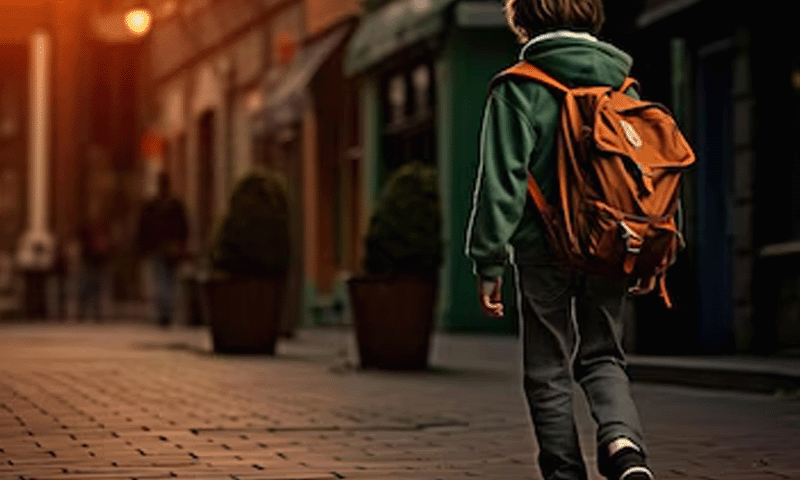
One Friday afternoon, she walked out of school carrying a backpack covered in band stickers. By Monday morning, her desk was empty.
The police searched for months.
Volunteers combed the woods.
Her face was printed on flyers, milk cartons, and local newspapers.
Nothing.
No clues. No suspects. No body.
Eventually, people stopped talking about her. That’s what small towns do when a mystery refuses to be solved. They bury it under new gossip and pretend life goes on.
But nobody forgot.
Especially me.
Because the night before she vanished, I had seen something strange.
I was working a part-time shift at a gas station when a black SUV pulled into the parking lot. Two men in suits got out and spoke to her for nearly twenty minutes. She looked nervous. Then they drove away.
The next day, she disappeared.
I told the police.
They dismissed it.
Twenty-six years passed.
I got married. Had kids. Lost my hair.
The mystery became just another story people told newcomers about our town.
Then one evening, while flipping through channels, I nearly dropped my coffee.
There she was.
On national television.
Older, of course.
But unmistakably her.
Same eyes.
Same voice.
Same name.
I thought I was losing my mind.
The documentary wasn’t about a missing person.
It was about one of the most influential cybersecurity experts in American history.
According to the program, she had been identified as a once-in-a-generation talent at age fifteen after accidentally exposing a major vulnerability in a federal computer system during a student competition.
Government officials approached her shortly afterward.
What followed was decades of classified work protecting critical national infrastructure from foreign cyberattacks.
The documentary host explained that much of her career remained secret even now.
Then came the sentence that made my stomach turn.
“For security reasons, her departure from civilian life was staged in a way that prevented public knowledge of her whereabouts.”
Staged.
I couldn’t believe what I was hearing.
The entire town had spent decades believing she had been murdered.
People left flowers at memorial events.
Some residents still talked about her in hushed voices.
Yet all along, she had been alive.
A week later, the story exploded online.
Reporters flooded our town.
Former classmates were interviewed.
And then the biggest surprise came out.
Her parents had known.
Not everything.
But enough.
They had been sworn to secrecy under agreements they could never discuss.
For twenty-six years they carried the burden of watching neighbors mourn a daughter who wasn’t dead.
When the documentary aired, they finally stepped onto their front porch and spoke publicly for the first time in decades.
The father said something I’ll never forget:
“The hardest part wasn’t letting her go. The hardest part was pretending we’d lost her.”
The mother simply smiled and said:
“Every birthday, we knew she was alive. That’s all that mattered.”
The next day, the entire town gathered in the high school gymnasium.
Not for a funeral.
Not for a memorial.
But for a welcome home celebration that was twenty-six years late.
And as she walked onto the stage, thousands of people stood and applauded.
For a moment, it felt like the missing chapter of our lives had finally been returned.
The girl we thought we’d buried decades ago had been alive the entire time.
Hidden in plain sight.
Protecting a country that never even knew her name.