At dinner, my son looked at me and said, “either you give your room to my wife, or you leave.”
I did not cry. I did not argue.
I simply packed my bags, walked out, and bought the beach house I had been quietly saving for.
Three days later, I was drinking coffee on my new porch while they stood outside the old house, reading the notice that proved they had no right to stay there without me.
The strangest part was how ordinary the dinner looked.
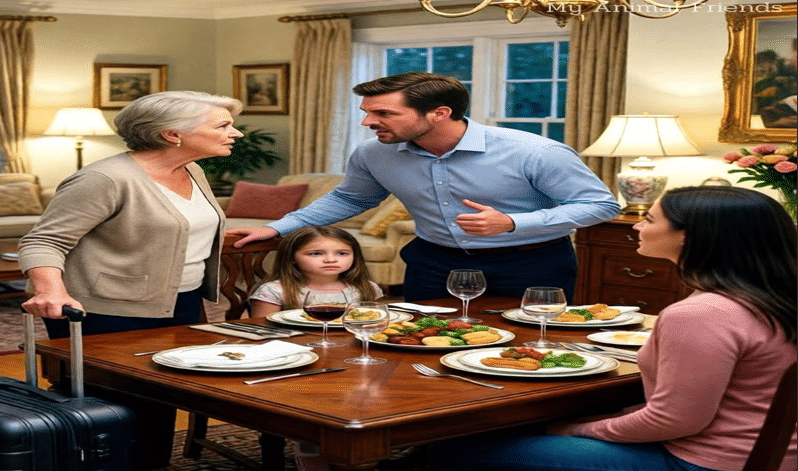
There was roast chicken on the table, green beans in the blue serving bowl my husband Daniel bought me twenty years ago, and a candle burning beside the salt shaker because Jessica said overhead lights made food look “tired.”
My granddaughter Emily was sitting across from me, pushing a potato around her plate.
My son Mark stood by the kitchen island with his arms folded, looking at me like he had already rehearsed the conversation and expected me to follow the script.
“Mom,” he said, “Jessica needs the master bedroom.”
I looked at him for a long second.
“My bedroom?”
Jessica did not look up from her glass of wine.
Mark nodded.
“She’s overwhelmed. She needs more space. The storage room has a window. We can clear it out for you.”
The storage room.
The room with Christmas bins, old tax files, broken lamps, and the treadmill nobody had used since 2014.
For thirty-two years, I had slept in the master bedroom.
I had sat on that bed after Daniel passed, holding his watch in my hand because I could not make myself put it away.
I had folded Mark’s laundry there when he moved back in “temporarily.”
I had wrapped Emily’s birthday gifts on that quilt.
I had prayed in that room when the house was too quiet and worked late on client accounts under the little brass lamp by the window.
And now my son was offering me a storage room.
Emily whispered, “Dad…”
Jessica’s eyes flashed toward her.
“Not now.”
Mark sighed.
“Mom, don’t make this harder than it has to be. Families sacrifice.”
That almost made me smile.
Families sacrifice.
I had been sacrificing since I was twenty-two.
I worked as a freelance accountant while raising Mark, took clients who paid late, cooked dinners after midnight during tax season, helped with his college, his wedding, his bills, his business mistakes, and eventually let him, Jessica, and Emily move into the house I owned because he said they just needed time.
Time became two years.
Two years of Jessica rearranging my kitchen cabinets, asking me to pick up groceries, correcting how I folded towels, and calling my home “our place” whenever company came over.
I placed my fork down.
“What happens if I say no?” I asked.
Mark’s jaw tightened.
Jessica finally spoke.
“Eleanor, no one is trying to be cruel. But this house needs to work for the family.”
I looked around the table.
At Mark, who could not meet my eyes.
At Jessica, who had already moved into my life one room at a time.
At Emily, whose face was pale with shame that did not belong to her.
Then Mark said it.
“Either you give your room to my wife, or you leave.”
The candle flame flickered.
No one moved.
I waited for him to soften.
To hear himself.
To say, “I didn’t mean that.”
I waited for Jessica to act embarrassed.
I waited for one person in that room to remember that the woman being pushed aside had paid for every wall around them.
No one did.
So I stood.
I folded my napkin once, placed it beside my plate, and said, “All right, Mark. I’ll pack my bags.”
He blinked, suddenly unsure.
“Mom, don’t be dramatic.”
“I’m not.”
I walked upstairs while they stayed silent below me.
In my bedroom, I opened one suitcase.
Not two.
One.
I packed Daniel’s watch, my journal, the blue mug Emily made in middle school, the family Bible, three sweaters, my laptop, and a folder of documents I had kept in the top drawer for years.
The deed.
The mortgage satisfaction letter.
The property tax records.
My name was on all of them.
Only mine.
That was the thing they had forgotten.
Or maybe they never knew because I had been kind enough not to remind them.
Daniel left the house to me.
I paid off the rest after he died.
Mark had lived there because I allowed it.
Jessica had decorated because I allowed it.
They had built a little kingdom on my patience and mistaken it for ownership.
At midnight, I sat on the edge of the bed and opened an old message from my best friend Sharon.
It was a beach house listing she had sent months earlier.
Small white cottage.
Blue shutters.
Two bedrooms.
Weathered porch.
Ocean view if you stood at the right angle.
I had saved for years without telling anyone.
Not because I planned to leave, but because somewhere deep down, some quiet part of me knew a woman should always have a door that opens only because she holds the key.
I called Sharon.
She answered sleepy.
“Ellie?”
“I think I’m ready to see the beach house.”
There was a pause.
Then she said, “I’ll pick you up at eight.”
The next morning, Mark was in the kitchen making coffee like nothing had happened.
“Mom,” he said, softer now, “we’ll talk tonight.”
“No,” I said. “We won’t.”
Jessica looked over from the island.
“Where are you going?”
“To look at a house.”
Mark laughed once.
“You’re not buying a house because of one argument.”
I slipped the folder into my tote bag.
“No,” I said. “I’m buying one because of all the arguments I didn’t have.”
The beach house was not fancy.
The porch boards creaked.
The kitchen needed paint.
The bathroom tile looked like it had survived three different decades and resented all of them.
But sunlight came through every window, and when Sharon opened the back door, I heard the ocean.
Not traffic.
Not Jessica’s voice.
Not Mark asking what was for dinner.
Just waves.
The realtor warned me it needed work.
I said, “So do I.”
By late afternoon, my offer was accepted.
That same evening, I met my attorney, Robert Leighton, in his downtown office.
He had handled Daniel’s estate and knew exactly what my house was worth, legally and emotionally.
I placed the deed on his desk.
“I want to sell it,” I said—
PART 2
He studied my face.
“Are you sure?”
“My son told me to leave.”
Robert removed his glasses and leaned back.
“Then let’s make sure you leave properly.”
We reviewed everything.
The title.
The accounts.
The will.
The old automatic transfers I had set up for Mark when he was “getting back on his feet.”
The grocery card.
The household account.
The emergency access.
One by one, Robert placed papers in front of me.
One by one, I signed.
By the second day, the buyers had accepted a quick closing.
By the third morning, I was sitting on the porch of my new little beach house with coffee warming my hands and a cardboard box at my feet, listening to gulls cry over the dunes.
My phone buzzed.
Mark.
Then Jessica.
Then Mark again.
Then Emily.
I answered Emily.
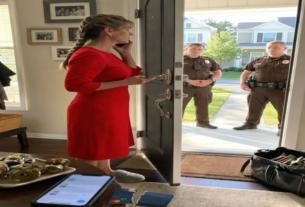
“Grandma,” she whispered, “Dad is outside. There’s a notice on the door.”
My heart did not race.
It simply became still.
“What does it say?” I asked gently.
I heard paper rustling.
Then Mark’s voice in the background, sharp and panicked.
“This can’t be real.”
Emily lowered her voice.
“It says the house has been sold. The new owners take possession Monday.”
I looked out at the ocean, at the soft gray morning, at the life waiting quietly in front of me.
Then I heard Jessica say, “But this is our home.”
And for the first time in years, I smiled.
Not because they were suffering.
Not because I wanted revenge.
I smiled because, finally, the truth had arrived at their front door.
My phone buzzed again.
This time, it was Mark.
I answered.
“Mom, what did you do?”
“I sold my house.”
“You can’t do that!”
“I already did.”
There was silence.
Then his voice dropped.
“But where are we supposed to go?”
I closed my eyes.
For years, that question had always been mine.
Where should I sleep?
What should I give up?
How can I make this work?
How can I help Mark?
How can I keep Jessica happy?
How can I make sure Emily doesn’t feel caught in the middle?
And somehow, every answer had required me to give up another piece of myself.
This time, I had no answer for him.
“You’ll have to figure that out, Mark.”
“Mom, we’re family.”
I looked toward the ocean.
“So was I.”
He went silent.
Then Jessica grabbed the phone.
“Eleanor, this is insane. You can’t just sell a house while we’re living in it.”
“I didn’t sell it while you were living there.”
“You knew we were there!”
“Yes.”
“And you didn’t tell us?”
“No.”
Her voice sharpened.
“You’re doing this to punish us.”
“No, Jessica.”
I paused.
“I’m doing this because you told me I wasn’t allowed to live in my own bedroom.”
She had no response.
I continued.
“You asked me to leave. I listened.”
The line went quiet.
Then Emily’s voice came through.
“Grandma?”
My expression softened.
“Yes, sweetheart?”
“Are you really leaving us?”
“No, Emily.”
I took a breath.
“I’m leaving the house.”
She was silent for several seconds.
Then she whispered, “I’m sorry.”
“You have nothing to apologize for.”
“But Dad said you were being selfish.”
I felt something inside me break.
Not anger.
Not surprise.
Just sadness.
“Emily, being selfish would have been asking you to choose between your father and me.”
I looked around my little beach house.
“I would never do that to you.”
She started crying.
I let her.
Then I said quietly, “You can always call me.”
“I love you, Grandma.”
“I love you too.”
When the call ended, I sat there for a long time.
The ocean kept moving.
The gulls kept calling.
And for the first time in years, the silence in my house didn’t feel lonely.
It felt like freedom.
That afternoon, Robert called.
“The closing is complete.”
I smiled.
“Thank you.”
“There’s something else.”
“What?”
“The buyers asked whether anyone currently living there has a claim to the property.”
I frowned.
“Mark doesn’t.”
“I know.”
Robert hesitated.
“But apparently Jessica has been telling people she contributed to the mortgage.”
I almost laughed.
“She bought furniture.”
“That’s what I thought.”
“Did she give you any proof?”
“No.”
Robert paused.
“But there is something you should know.”
“What?”
“She has apparently been telling the neighbors that she owns half the house.”
I stared at the ocean.
Of course she had.
For two years, they had mistaken comfort for entitlement.
They had mistaken kindness for weakness.
And they had mistaken silence for permission.
“I’ll handle it,” I said.
“You already did.”
He hung up.
I set my phone down.
Then I heard a knock at the front door.
I wasn’t expecting anyone.
When I opened it, Sharon stood there holding a paper bag.
“I brought dinner.”
I smiled.
“You didn’t have to.”
“I know.”
She stepped inside.
“That’s why I did it.”
We ate on the porch that evening.
For the first time in years, I didn’t have to ask anyone what they wanted.
I didn’t have to adjust the thermostat.
I didn’t have to listen for footsteps.
I didn’t have to wonder whether someone was angry with me.
I simply watched the sun disappear beyond the water.
And somewhere far away, my old house was no longer mine.
But neither was it theirs.
PART 3
The next morning, Mark showed up at my beach house.
Alone.
I knew it was him before I opened the door.
He stood on the porch with his hands in his pockets.
He looked exhausted.
“Can I come in?”
I stepped aside.
He walked into the living room and looked around.
At the blue shutters.
The worn wooden table.
The photographs I had already placed on the mantel.
“You really bought this.”
“Yes.”
He nodded slowly.
“I didn’t think you would.”
“I know.”
He looked at me.
“Mom, I was angry.”
“I know.”
“I thought Jessica was overwhelmed.”
“I know.”
“I thought you would understand.”
I sat down.
“Mark, I understood everything.”
He looked confused.
“Then why didn’t you stop me?”
“Because you weren’t asking me to understand.”
I paused.
“You were ordering me to leave.”
His eyes dropped.
For the first time, he looked less like an angry son and more like the little boy who used to sleep with the hallway light on during thunderstorms.
“I didn’t mean for you to actually leave.”
I looked at him.
“Then you shouldn’t have told me to.”
He swallowed.
“Where are we going to live?”
“I don’t know.”
“Mom…”
“I can’t solve that for you.”
He rubbed his forehead.
“Jessica says we should challenge the sale.”
“I expected that.”
“Do you know what she’s saying?”
“No.”
“She says you manipulated everything.”
I almost smiled.
“Did she say that before or after she realized the house wasn’t hers?”
Mark said nothing.
Then he reached into his pocket.
He pulled out an envelope.
“I found this in the desk.”
I recognized it immediately.
It was the letter Daniel had written to Mark shortly before he died.
I had kept it sealed.
I had never read it.
Neither had Mark.
“What does it say?” he asked.
“I don’t know.”
He looked at the envelope.
“Dad wrote my name on it.”
“Yes.”
“Why didn’t you give it to me?”
“Because he told me not to.”
Mark stared at me.
“What?”
“He told me to give it to you when you were ready to understand what responsibility meant.”
Mark’s face changed.
“Did he know?”
“Know what?”
“That I’d move back home?”
I looked away.
“He knew you loved comfort.”
Mark opened the envelope.
His hands trembled.
He read silently.
I watched his eyes move across the page.
Then he stopped.
His face went pale.
“What?”
He looked at me.
“He knew.”
I didn’t ask what.
Mark sat down.
“He wrote that the house was mine only if I could support myself without depending on you.”
I said nothing.
“He said you spent your whole life protecting me from consequences.”
His voice cracked.
“And he said that one day, I might mistake your love for an obligation.”
I looked down at my hands.
Daniel had known me better than anyone.
Mark folded the letter carefully.
“Mom…”
I looked at him.
“I think I did.”
There was no anger in his voice.
Only shame.
I didn’t rush to comfort him.
Not this time.
He needed to sit with the truth.
After several minutes, he stood.
“I’m sorry.”
“I know.”
“Can I fix this?”
“Not for me.”
He looked confused.
“Then who?”
“For yourself.”
He nodded slowly.
At the door, he stopped.
“Can Emily still visit you?”
I smiled.
“She never needed permission.”
His eyes filled with tears.
“Thank you.”
After he left, I walked onto the porch.
The morning sun was warm.
A few days later, Emily came to stay with me for the weekend.
She brought her backpack, her favorite stuffed rabbit, and a drawing she had made at school.
She taped it above the kitchen table.
It showed a little white house beside a huge blue ocean.
There were three people standing outside.
Me.
Emily.
And Daniel.
I touched the drawing.
“You put Grandpa here.”
She nodded.
“He’s watching the house.”
I smiled.
“Maybe he is.”
She leaned against me.
“Grandma?”
“Yes?”
“Are you happy?”
I looked toward the water.
Then I looked at the little cottage I had been too afraid to buy for years.
“Yes,” I said.
“I think I finally am.”
Emily smiled.
“Good.”
That evening, she helped me make dinner.
We burned the first batch of biscuits.
We laughed about it.
And when the sun went down, I realized something.
I had spent years believing that keeping a family together meant holding onto a house.
But a house was only walls.
A family was supposed to be people who made room for one another.
Not people who demanded that someone disappear so they could have more space.
I never stopped loving Mark.
I never stopped loving Emily.
But I stopped confusing love with surrender.
The old house belonged to someone else now.
The storage room was no longer my problem.
The master bedroom was no longer something I had to defend.
And every morning, when I opened the blue shutters of my little beach house, I remembered the lesson I had almost forgotten.
Sometimes walking away isn’t losing your family.
Sometimes it’s the first time you finally stop losing yourself.
And that was enough.