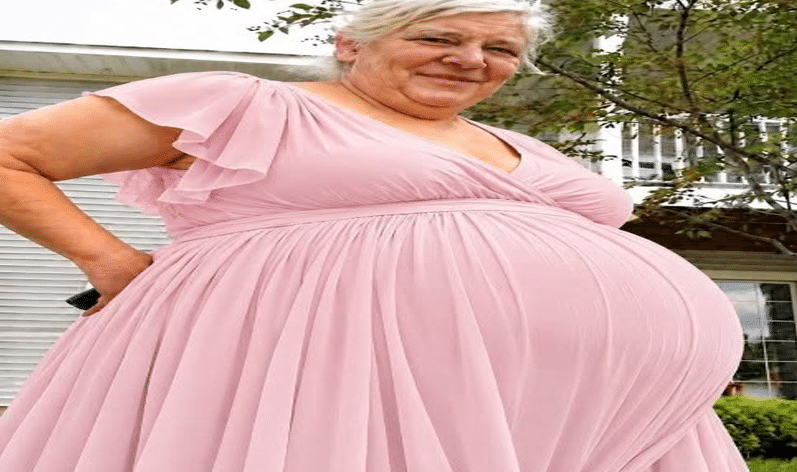
At 80, my stomach began swelling mysteriously. Then doctors uncovered a 12-year-old secret my husband had taken to his grave.
At eighty years old, I thought I had already experienced life’s biggest surprises.
I had raised three children, welcomed seven grandchildren, and buried the husband I’d loved for fifty years.But nothing prepared me for the morning I looked down at my swollen stomach and realized something was seriously wrong.
For six months, my abdomen had been growing larger. My clothes no longer fit, and strange sensations sometimes kept me awake at night.
When doctors finally examined me, they discovered an unusual medical condition that needed further investigation.
But that wasn’t what frightened me most.
The real shock came when a doctor found an archived medical record bearing my late husband’s name.
The document was twelve years old.
And beside his signature were two words I had never seen before.
PROJECT MARGARET.
What followed would change everything I believed about my marriage.
Part 1: The mystery begins
My name is Margaret Whitmore. I’m eighty years old, and until recently, I lived a peaceful life in the house where my late husband, Robert, and I raised our family.
Robert passed away twelve years ago.
Even after all that time, I sometimes caught myself reaching for a second coffee cup in the morning.
His favorite chair remained beside the living room window, and his photograph stood on the mantel.
My children thought I should move somewhere smaller.
But I loved that house.
It held fifty years of memories.
My youngest son, Daniel, visited most Sundays with his wife, Sarah. My oldest daughter, Rebecca, called every evening, while Thomas, my middle child, lived several states away.
I had my garden, my church friends, and more family photographs than I had room to display.
I considered myself fortunate.
Then my health began changing.
At first, my skirts felt tighter around the waist.
I assumed it was ordinary weight gain.
But the swelling continued.
Within three months, I had stopped wearing fitted clothing entirely.
By the sixth month, my stomach had become unusually rounded and firm.
I sometimes experienced uncomfortable pressure after meals, and I occasionally felt fluttering sensations that were difficult to explain.
I tried not to worry.
At my age, I reasoned, bodies change.
But one Sunday afternoon, Sarah noticed.
“Mom, have you been feeling all right?”
“Of course, sweetheart.”
She glanced at my stomach.
“Have you spoken to your doctor about the swelling?”
I waved away her concern.
“It’s probably nothing serious.”
Sarah placed her hand over mine.
“Please promise you’ll get it checked.”
I finally agreed.
That evening, after Daniel and Sarah left, I went upstairs and opened my bedside drawer.
Inside was a small envelope.
Robert had given it to me shortly before he died.
On the front, in his familiar handwriting, were the words:
MARGARET — ONLY IF NECESSARY.
He had asked me to keep it somewhere safe.
“If something happens that you don’t understand,” he had said, “you may find the answers here.”
At the time, I’d assumed he was worried about household finances or unfinished business.
For twelve years, I had never opened it.
But now, holding the worn envelope in my hands, I remembered something else.
A woman had visited Robert during his final hospitalization.
Her name was Dr. Evelyn Carter.
She carried a silver briefcase and spoke privately with my husband.
Afterward, Robert seemed unusually troubled.
“Margaret,” he told me, “if you ever need answers about my work, remember Evelyn’s name.”
I had forgotten those words for years.
Now they returned with unsettling clarity.
The following morning, I called Daniel.
“Sweetheart, could you take me to the hospital?”
He arrived twenty minutes later.
The moment he saw me, concern spread across his face.
“Mom, why didn’t you tell me the swelling had gotten worse?”
“I didn’t want to worry anyone.”
He hugged me.
“That’s what families are for.”
At the hospital, a physician named Dr. Helen Parker examined me and ordered an ultrasound.
The technician studied the images carefully before asking another specialist to review them.
After additional tests, Dr. Parker explained that my abdomen contained a large fluid-filled mass.
Its exact nature was unclear, and further imaging was necessary.
“Is it something serious?” I asked.
“We need more information before we can answer that,” she replied. “But we’re going to investigate it thoroughly.”
Daniel stayed beside me.
Then Dr. Parker asked an unexpected question.
“Mrs. Whitmore, did you ever receive treatment through a private research facility?”
I shook my head.
“Not that I remember.”
She opened a folder.
“We found a reference in an archived record from twelve years ago. It appears connected to a research organization called Carter Biomedical.”
I stared at her.
“Carter?”
“Yes.”
I slowly turned toward Daniel.
“Your father’s old colleague was named Evelyn Carter.”
My son’s expression changed.
“Mom, there’s something I need to tell you.”
And for the first time, I wondered whether the mystery surrounding my health might be connected to a part of Robert’s life I had never understood.
Part 2: The secret in the basement
That evening, Daniel sat beside my hospital bed looking unusually nervous.
“Mom, Dad had another safe.”
I frowned.
“What are you talking about?”
“A safe in the basement, behind the old storage cabinets.”
I stared at him.
“I lived in that house for fifty years. I never knew.”
“I only discovered it after Dad died.”
“What was inside?”
“Mostly documents. Contracts, insurance papers, and research files.”
Daniel hesitated.
“One folder had your name on it.”
My heart began beating faster.
“What did it say?”
“Project Margaret.”
I sat silently for several moments.
Robert had been an insurance businessman, or so I believed.
He had occasionally mentioned investments, but I had never known him to be involved in medical research.
“Why didn’t you tell me?” I asked.
“I didn’t think it mattered. I thought it was an old business project.”
He looked ashamed.
“I should have asked more questions.”
The next day, Daniel brought the files to the hospital.
Among the papers was a photograph of Robert standing outside a modern laboratory beside a tall, blond woman.
I recognized her immediately.
Evelyn Carter.
On the back of the photograph were the words:
PROJECT MARGARET — PHASE ONE.
I studied my husband’s face.
He looked younger, confident, and proud.
Whatever this project involved, he had clearly considered it important.
Daniel opened another folder.
Inside were letters discussing medical research, patient observation, and a program intended to study long-term health outcomes.
Then he found a document with my name on it.
I stared at the date.
Twelve years earlier.
The same week Robert had been admitted to the hospital for the final time.
“I don’t remember agreeing to participate in any research,” I whispered.
Daniel looked troubled.
“Perhaps Dad arranged a routine medical consultation for you.”
I shook my head.
“Then why didn’t he tell me?”
Dr. Parker joined us later that morning.
She explained that the research documents were separate from my current diagnosis and that there was no established medical connection between them.
However, they raised important questions about my past medical records.
“We should obtain the original documentation,” she advised.
I agreed immediately.
Then Daniel discovered something unexpected.
A page listing participants in the original project contained his name.
“Daniel Whitmore,” I read aloud.
He stared at the paper.
“I remember this.”
I looked at him.
“You do?”
“Dad asked me to participate in medical testing years ago. He said the information could help researchers studying inherited health conditions.”
“Why didn’t you tell me?”
“I hardly remembered it. They took blood samples and asked about our family medical history.”
He looked at the document again.
“I didn’t know your name was connected to the project.”
The discovery left us both confused.
Later that afternoon, I remembered something from Robert’s final hospitalization.
I had suffered an episode of dizziness and exhaustion while visiting him.
A nurse had helped me into a wheelchair, and doctors had examined me.
Robert later said everything was fine.
I hadn’t questioned him.
But now I wanted to know whether that examination had been connected to the research.
“Daniel, I need you to bring me the envelope from my bedroom.”
He nodded.
“And every letter from your father’s safe.”
“Of course.”
I looked out the hospital window.
For decades, I had believed I knew everything important about my husband.
Now I was discovering that he had kept an entire chapter of his life hidden from me.
Part 3: The letter that changed everything
Daniel returned that evening with Sarah and a cardboard box filled with documents.
Inside was Robert’s sealed envelope.
I recognized his handwriting immediately.
For twelve years, I’d kept that envelope as a treasured reminder of my husband.
Now I was afraid of what it might contain.
I carefully opened it.
Inside was a handwritten letter.
My dearest Margaret,
If you’re reading this, I imagine you’ve discovered something about my work that I should have explained long ago.
There is a part of my business life I kept separate from our family.
I convinced myself that I was protecting you from unnecessary worry.
But I understand now that keeping secrets can damage the very trust we’re trying to preserve.
I stopped reading.
Daniel leaned closer.
“Mom?”
“I’m all right.”
I continued.
For several years, I helped finance a medical research program led by Dr. Evelyn Carter.
The project was intended to improve the understanding of certain long-term health conditions.
Your name was included in the early family medical research records because I believed the information might someday be useful.
I should have explained everything to you.
I should have asked whether you wanted any involvement.
Instead, I avoided the conversation.
That was wrong.
My eyes filled with tears.
Robert had not told me about the project.
He had made assumptions about what I would accept, and he had allowed those assumptions to replace an honest conversation.
The letter continued.
Daniel participated in basic testing, but he knew very little about the broader project.
Please don’t blame him.
If questions arise, contact Evelyn Carter and request the complete records.
Whatever mistakes I’ve made, please remember that I loved you.
Robert.
I lowered the letter.
For a long time, nobody spoke.
Then Daniel whispered, “I’m sorry, Mom.”
I shook my head.
“You didn’t write this.”
“But I knew Dad had those papers.”
“You were trying to respect his privacy.”
Sarah gently touched my shoulder.
“Margaret, how are you feeling?”
I looked down at the letter.
“Like I’ve lost part of my husband all over again.”
It wasn’t that Robert had stopped loving me.
It was that he had made choices involving our family’s private medical information without giving me the chance to understand them.
For fifty years, I’d believed our marriage was built on complete honesty.
Now I realized there had been important things we never discussed.
Daniel opened another folder.
Inside were copies of research correspondence and a form that appeared to carry my signature.
I studied it carefully.
“That’s strange.”
“What is?” Daniel asked.
“The last letter in my name. I haven’t written it that way since I was young.”
Sarah leaned closer.
“Could this have been copied from an older document?”
I remembered our marriage certificate.
Robert had kept it in his desk.
My signature on that certificate looked almost identical.
I couldn’t determine whether the research form was authentic, but the resemblance made me uncomfortable.
“We need someone to examine these documents properly,” I said.
Daniel nodded.
“No more assumptions.”
“No more secrets,” I replied.
Then he found a letter from Evelyn.
It was dated shortly before Robert’s death.
Robert,
Before any further research proceeds, we need to ensure that all family participants understand the project and have provided appropriate authorization.
Please arrange a conversation with Margaret.
She deserves to understand how her medical information may be used.
I read the passage twice.
Evelyn had recognized the importance of telling me.
But had that conversation ever happened?
I looked at Daniel.
“Find her.”
“Who?”
“Dr. Evelyn Carter.”
I folded Robert’s letter.
“I want to hear the full story from someone who was there.”
Part 4: The woman with the silver case
Evelyn Carter arrived at the hospital the following afternoon.
Her hair had turned silver, and she moved more slowly than I remembered.
But I recognized her immediately.
She paused in the doorway.
“Margaret.”
“Hello, Evelyn.”
She glanced at Daniel and Dr. Parker.
“I understand you’ve found some of the old research files.”
“Yes,” I replied. “And I have questions.”
She nodded.
“I expected you would.”
I motioned toward the chair beside my bed.
“Then please sit down.”
Evelyn explained that Robert had spent years helping finance a research program focused on preserving biological tissue and studying hereditary medical conditions.
The project had involved collecting information from volunteers and their families.
Daniel had provided samples and participated in several examinations.
Robert had also submitted family medical records for review.
“Why did he keep all of this from me?” I asked.
Evelyn lowered her eyes.
“Your husband believed the research might eventually lead to treatments that could help thousands of people.”
“That explains his interest. It doesn’t explain the secrecy.”
“You’re right.”
I studied her.
“Did I ever agree to participate?”
Evelyn took a moment before answering.
“The available documents indicate that your information was included. But I can’t establish from those records whether you personally authorized every aspect of its use.”
I looked toward Daniel.
He was listening intently.
“Then why didn’t anyone ask me directly?”
“Robert said he would discuss it with you.”
“He never did.”
Evelyn looked genuinely troubled.
“Then that was a failure we should have addressed.”
Dr. Parker asked whether the research had anything to do with my current abdominal condition.
Evelyn reviewed the medical scans and laboratory reports.
“There is no evidence from these findings that the old research caused Margaret’s present condition,” she explained.
Dr. Parker agreed that the medical issue required its own investigation and treatment.
For the first time, I felt some relief.
My health problem was real, but it did not necessarily mean my husband’s research had physically harmed me.
Still, the hidden documents had revealed a breach of trust.
“What happened to the project after Robert died?” I asked.
“Funding declined, the organization reorganized, and the research was eventually discontinued.”
“Then why weren’t the participants informed?”
“Some were. Unfortunately, the surviving records suggest that communication was incomplete.”
I shook my head.
“Twelve years, Evelyn. That’s a long time to leave questions unanswered.”
She nodded.
“It is.”
For several moments, we sat in silence.
Then I asked the question that mattered most.
“Did Robert know I hadn’t been properly informed?”
Evelyn hesitated.
“He knew there were outstanding questions about the documentation.”
My throat tightened.
“And he did nothing?”
“He told me he intended to speak with you.”
“But he didn’t.”
“No.”
I looked away.
Robert had always disliked difficult conversations.
When our children were young, he postponed disagreements until everyone had forgotten what started them.
At the time, I thought he simply wanted peace.
Now I understood that avoiding difficult truths sometimes created even greater problems.
Evelyn reached into her bag and removed a folder.
“These are the remaining records. You deserve access to them.”
I accepted the folder.
“Thank you.”
She looked relieved.
But I hadn’t finished.
“One more question.”
“Of course.”
“Did Robert love me?”
Evelyn seemed surprised.
“Very much, Margaret.”
I closed my eyes.
“Then I wish he’d trusted me enough to tell me the truth.”
Evelyn had no answer.
Before leaving, she said quietly, “I’m sorry these questions were left unresolved.”
I nodded.
I wasn’t ready to forgive her.