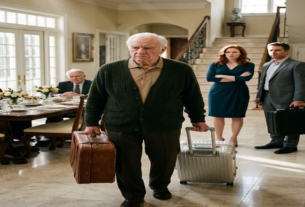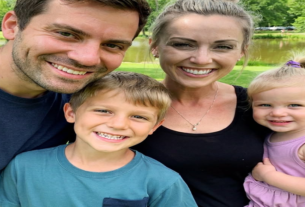
We adopted a sixteen-year-old boy and his four-year-old sister after several families had already turned them down.
Most people wanted little Josie.
The problem was that Josie came with Jace.
And Jace had spent years learning what happened when adults decided a teenager was more responsibility than they wanted.
One month after they moved into our home, their former foster mother called to see how they were doing.
I happily told her they were finally settling in.
Then she went strangely quiet.
“Wait… they still haven’t told you why they chose you?”
I froze.
“Why they chose us?”
Until that moment, I thought my husband and I had been the ones making the decision.
I had no idea the children had been making one of their own.
My husband and I had dreamed about becoming parents for years.
For five of those years, we tried to have a biological child.
There were appointments.
Tests.
Treatments.
Months of hope followed by disappointment.
Eventually, we reached the point where continuing was taking more from us emotionally than we could handle.
But one thing hadn’t changed.
We still wanted to be parents.
We still wanted a family.
So we decided that perhaps our family was simply meant to begin differently.
That was how we contacted a local adoption agency.
And that was how we met Josie.
She was four years old.
Brown curls framed her face, her eyes seemed permanently curious, and when she smiled, you almost automatically smiled back.
My husband adored her within minutes.
So did I.
I remember leaving that first meeting thinking,
Could this really be our daughter?
But before anything progressed, our caseworker asked us to sit down privately.
“There’s something you need to understand about Josie.”
My stomach tightened.
Then she explained.
Josie had a brother.
His name was Jace.
He was sixteen.
And separating them wasn’t an option.
If we wanted Josie to become part of our family, we needed to be willing to welcome Jace too.
Then our caseworker told us about the families who had come before us.
Several couples had been interested in Josie.
They loved her age.
Her personality.
Her bright smile.
Everything seemed wonderful—until they learned about Jace.
Suddenly, people reconsidered.
Again.
And again.
They were prepared to raise a four-year-old girl.
They weren’t prepared to welcome a sixteen-year-old boy they assumed would bring challenges they didn’t want.
The hardest part was knowing Jace understood exactly what was happening.
He had watched adults become excited about his little sister and then disappear after learning that keeping Josie meant keeping him too.
He knew they wanted her.
He also knew they didn’t want him.
My husband and I talked privately afterward.
Not for very long.
We hadn’t entered adoption expecting some imaginary perfect child with a perfect history.
We wanted to build a family.
And Jace and Josie were already a family.
We weren’t going to ask them to stop being one so we could create ours.
So we said yes.
To both of them.
The beginning was harder than the happy adoption stories make it sound.
Josie often woke crying during the night.
Sometimes my husband or I would be halfway down the hallway when we heard her calling,
“Jace!”
And somehow, Jace was always there.
He would sit beside her until she calmed down.
Sometimes he barely seemed awake himself.
But if Josie needed him, he came.
With us, however, Jace remained distant.
He was never disrespectful.
That almost made it more heartbreaking.
He was incredibly polite.
Careful.
Quiet.
He thanked us for meals.
He cleaned up after himself.
He rarely asked for anything.
It was as though he was determined not to give us a single reason to regret taking him in.
Then I noticed his bags.
Weeks had passed.
He still hadn’t unpacked.
His clothes remained neatly folded inside them.
Most of his belongings stayed organized and ready to move.
I knew what that meant.
Jace didn’t believe this was permanent.
He was waiting for the moment when we sat him down and said this wasn’t working.
Waiting for us to decide raising a teenager was too difficult.
Waiting for history to repeat itself.
I wanted desperately to tell him that wouldn’t happen.
But I also understood that words probably wouldn’t mean much to a sixteen-year-old who had already heard promises from adults before.
So we didn’t pressure him.
We simply kept showing up.
Breakfast happened every morning.
Dinner happened every evening.
His room remained his room.
His place at the table remained his place.
Nobody asked him to earn it.
Slowly, Josie began changing first.
She stopped waking up crying quite so often.
Her toys started appearing everywhere.
Under the couch.
Across the living-room floor.
On the stairs.
One afternoon, she casually referred to our house as “home.”
I nearly cried.
Jace took longer.
But eventually, tiny changes appeared with him too.
He stopped disappearing immediately after dinner.
He began talking to my husband more.
Sometimes they would sit together discussing something long after Josie and I had left the table.
Then one evening, my husband made an absolutely ridiculous joke.
Normally, Jace would have given him a polite smile.
Instead, he laughed.
A real laugh.
It escaped before he could stop himself.
Josie immediately started giggling because Jace was laughing.
Then I started laughing.
Within seconds, all four of us were sitting around the dinner table laughing over something completely stupid.
It sounds like such a small moment.
It wasn’t.
For once, Jace wasn’t carefully measuring his behavior.
Josie wasn’t anxious.
My husband and I weren’t wondering whether we were doing everything correctly.
We were simply four people laughing around a table.
A family.
About a month after the children moved in, my phone rang.
It was Marlene, their former foster mother.
I assumed she wanted an update.
I was happy to give her one.
“Josie is doing wonderfully,” I told her. “She’s sleeping better. She leaves toys everywhere now, and she calls this place home.”
Marlene laughed softly.
“That sounds like Josie.”
“And Jace is finally starting to relax.”
“Really?”
“Yes. He’s talking more. He spends time with my husband. Last night those two were joking around at dinner, and Jace couldn’t stop laughing.”
Then Marlene became silent.
At first, I thought the call had dropped.
“Marlene?”
“I’m here.”
Something about her voice had changed.
“Is everything okay?”
“Yes. I just…”
She stopped.
Then she said something that completely confused me.
“They still haven’t told you?”
“Told me what?”
Another pause.
Finally, Marlene asked:
“Why they chose you.”
I actually laughed.
Not because it was funny.
Because the question made no sense.
“Why they chose us?”
“Yes.”
“Marlene, I think you have that backward.”
“No,” she said quietly. “I don’t.”
My smile disappeared.
“What are you talking about?”
For the entire adoption process, I had assumed my husband and I were being evaluated.
Our marriage.
Our finances.
Our home.
Our backgrounds.
Our ability to provide stability.
Of course the children’s feelings mattered, especially Jace’s.
But I had never imagined there was something more deliberate happening behind the scenes.
“Marlene,” I said slowly, “what exactly do you mean when you say they picked us?”
She hesitated.
Then she asked whether I remembered the first time we met Josie.
“Yes.”
“And do you remember thinking Jace wasn’t paying much attention to you?”
I sat straighter.
“Yes…”
Marlene took a breath.
“He was paying attention to everything.”
My stomach tightened.
Apparently, long before my husband and I had decided we wanted Jace and Josie in our family, sixteen-year-old Jace had been quietly watching us.
Listening.
Asking questions we never knew about.
And protecting his little sister in a way neither of us had understood.
What Marlene told me next completely changed how I remembered our first meeting.
Because we hadn’t simply chosen two children.
They had chosen us first.